

FUEL INJECTION
Fuel delivery
for changing conditions.
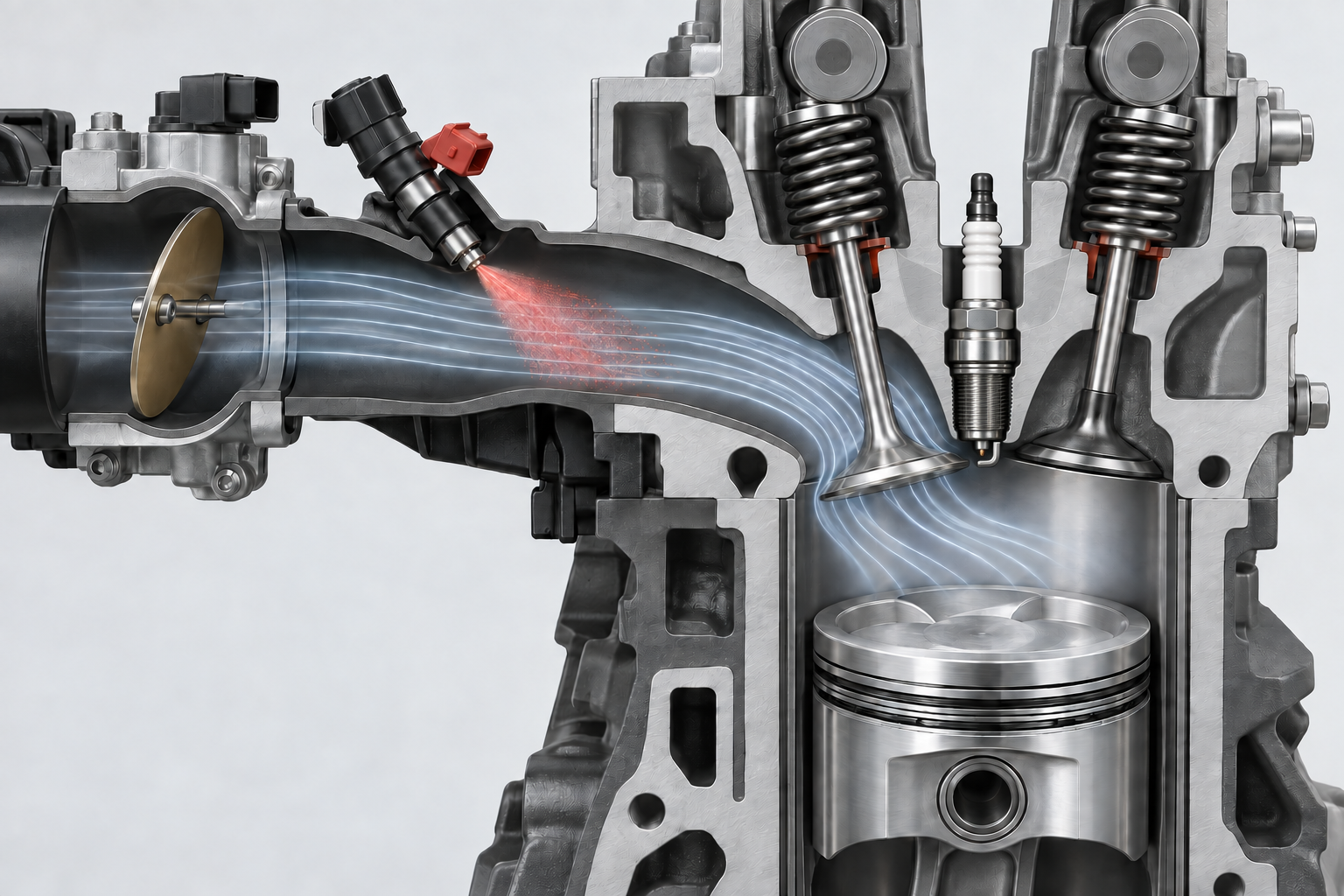
Electronic fuel injection manages fuel delivery using engine operating information. Injection quantity, timing and hardware matching together shape the conditions for combustion.
Explore the Principles
From air demand to injection commands.
Engine speed, load and temperature change during operation. The control system uses available sensor information and calibration data to calculate injection commands, then delivers fuel through the injector. Sensor configurations and calculation strategies may vary between systems.
Sense Operating Conditions
Speed · Load · Temperature
Calculate Demand
Base Fueling · Operating Corrections
Inject Fuel
Injector · Fuel Delivery
This process illustrates control relationships. Specific inputs, strategies and functions depend on the product configuration.
Engineering Considerations
Cold Starting & Warm-up
Low temperatures change fuel evaporation and mixture formation. Fuel requirements should be discussed in relation to starting conditions, engine temperature and warm-up.
Acceleration & Deceleration
Air and fuel do not respond identically to rapid changes in throttle opening. Transient fueling needs to be evaluated against engine design and actual vehicle response.
Steady Operation
At steady operating conditions, control can be discussed in terms of target air-fuel ratio and combustion stability. Whether oxygen sensor feedback is used, and in which operating regions, depends on the system configuration.
START WITH THE DETAILS
Before we talk,
gather a few key details.
Engine & Application
Displacement, cylinder count, intake arrangement and intended vehicle type.
Fuel System
Injector, EFI installation arrangement, fuel supply conditions and fuel type.
Operating Limits
Starting temperature, altitude changes and main operating conditions.
Contact Us
Start with your engine.
Tell us about your engine platform, application and project goals to give our technical discussion a clear starting point.